







Engineering a career in racing…
I’ve always been interested in sports. As for engineering, my grandfather was one influence; he was in the field of CNC machine building, so some of my interest in technical subjects came from him, and my uncle, who is a big motorcycle fan and an engineer, albeit in a different field.
I grew up watching the racing on TV every Sunday, especially when we went to my grandmother’s house. We’d have lunch as a family and I’d watch the races, mainly MotoGP. Though I followed the sport on TV, it felt like something distant and out of reach, so I initially put it to one side. I worked in an engineering office that focused mainly on aeronautical components.
Then in 2016 I was involved in MotoStudent, a contest where universities around the world each develop a motorcycle and compete against each other. I was involved for two years and enjoyed it so much, I realised I wanted to give it a go as a career.
I moved to Barcelona to do a master’s degree in motorsport and that involved an internship in the Spanish championship. From there, things moved fast. After one year I was working in the European championship and then I had the opportunity to jump to the Moto2 World Championship. I was there for three years, and now I’m in my fifth year in the WorldSBK paddock.
Joining my dream team
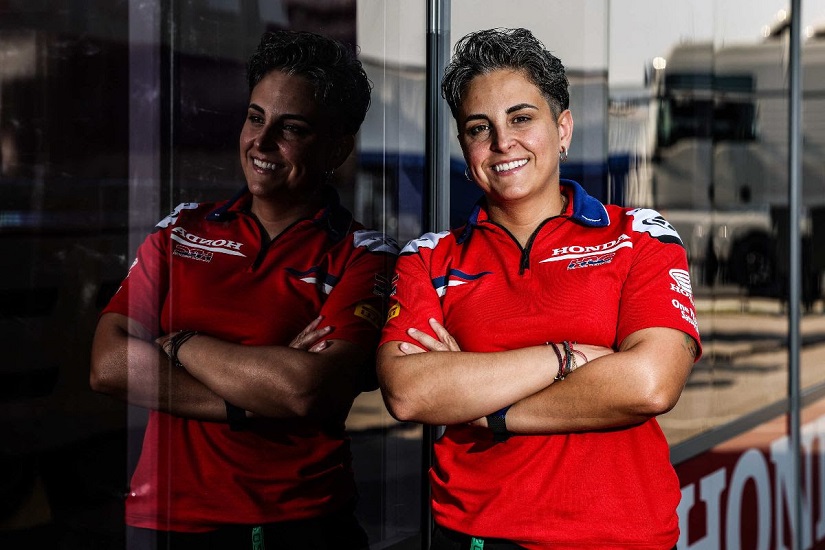
In 2022, I had the chance to join Honda, the company of my dreams, as data acquisition and analysis engineer. I had been working in Moto2, with a team running Kalex machinery, so for me to go from that to a Superbike, I had a feeling it would be an opportunity for me to learn a lot, and I was right about that! The difference was night and day when I arrived in WorldSBK that season.
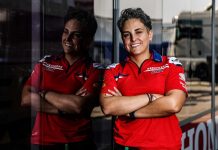
My role now is FI Applications Engineer and, honestly, I enjoy every aspect of my job! I enjoy being with my colleagues. I truly feel that I am learning and growing every single day that I am here. And this very much fits my way of thinking, as I love to learn. It’s a dream come true to be working here, it really is.
Staying ahead of the curve
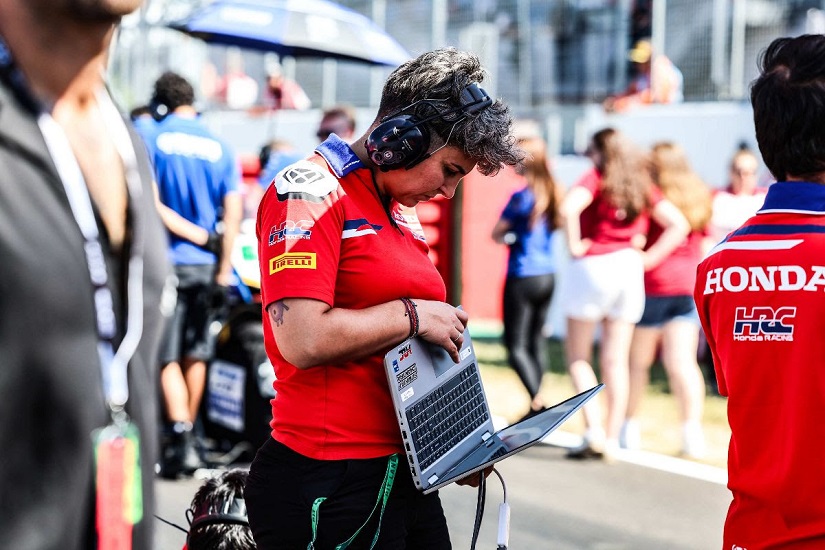
My role relates to the management of strategies inside the ECU, so I manage the engine brake setting, torque setting, traction and wheelie control, all the strategies relating to performance. People on the outside might underestimate the importance of the electronics. The numbers and sheer quantity of data we are dealing with is incredible and only grows year on year; I’m sure people have no idea what we are doing! Last year I completed a master’s degree in Big Data and Data Science for this very reason, because I think this is where the future of the sport lies. There’s so much data and I think those who can effectively manage this quantity of data will be the ones who continue to play a role. You always need to grow, and this has always been my way; I don’t like to be ‘stuck’.
As an engineer, I’d say you need to be a well organised person and be able to simplify things. Stress management is also a factor, and something I think I was already good at. Even if I’m stressed on the inside, I’d say I always maintain a very calm exterior. This is just the way I am, I think.
I would say the job is 50% preparation and 50% problem solving in the moment, because we do a lot of preparation at home, preparing for all the possible scenarios we might face, but when you get to the track there will always be something you didn’t think about or plan for, but that’s normal, it’s a part of racing. You just need to be able to adapt to any situation.
The victories nobody sees
In our world, everyone is here for results. So, if you reach the podium, of course that is a satisfying outcome. But only three riders can reach the podium each time, and so you must be able to find satisfaction in other things too. Perhaps you can find a solution for something that the team is struggling with, for example. If I’m able to achieve some improvement or find something that makes the rider happier or more comfortable, I really enjoy that aspect too.
As for rider collaboration, as engineers we listen to their feedback and try to understand what they are feeling on the bike. Sometimes they can identify a sensation but don’t really know where it comes from or what is causing it, so we need to try and get to the heart of it. And once we understand, we can work to find the best solution for the problem we are facing, together, because in the end we are a team.
Finding the right balance
I came to WorldSBK from the MotoGP paddock. At first, I wasn’t sure whether I was going to like it, but I’m now in my fifth year here and can say that I’m super happy.
I think the goal for many young people when they start in this world is to work in MotoGP, but there are other things in life that are also important. I’m a mother now, and the MotoGP calendar would be tough to handle!
Since I became a mum, everything’s changed. Aspects of life that I saw as being super important in the past are no longer a priority. My daughter is still very young, and it’s hard when I’m far away of course. But my wife is very supportive; we make a good team. She appreciates that this is my lifestyle and she respects that.
Visibility creates possibility
One key lesson I’ve learned is the importance of the people around you. In this job especially, strong relationships matter because we spend long periods away from home and many hours together in the garage. You need to be well supported, and I think that applies to everyday life as well – you always need the right people around you.
I’ve never had an issue as one of few women working in a technical role here. The problem is more that when I was a kid, I didn’t have any female references. And if you don’t have a reference in your mind, perhaps you don’t think it’s an option for you. I think some young women perhaps think it’s not possible to work here. But it is! I’ve never had any issues, and I got to where I am today quite fast.
When I was studying engineering, there were just four girls in a class of 90. So that goes someway to explain why there are so few women working in technical roles in this paddock! I don’t like doing interviews if I think I’m only being asked because I’m a woman and not because of what I do. But on the other hand, I think it’s super important for people like me to do these things, because if we don’t, young people, young girls, just won’t know what’s possible. I think it’s important for young women to have role models; I hope my daughter will have good role models.
Never stop fighting
In the end, this is competition. In terms of my motivation, that’s easy – I really want to win. I really want to be on the podium. I really want to be World Champion. It’s something that everybody who works here wants; that’s what we’re here for!
As for a piece of advice I’d give to my younger self, that’s also easy. Fight for your dreams.