
















German Athlete Is Running From Death Valley to Los Angeles, Facing Extreme Heat, Dehydration, Sleep Loss, and Potential Wildlife Encounters, with Live Tracking Available Throughout the Attempt.
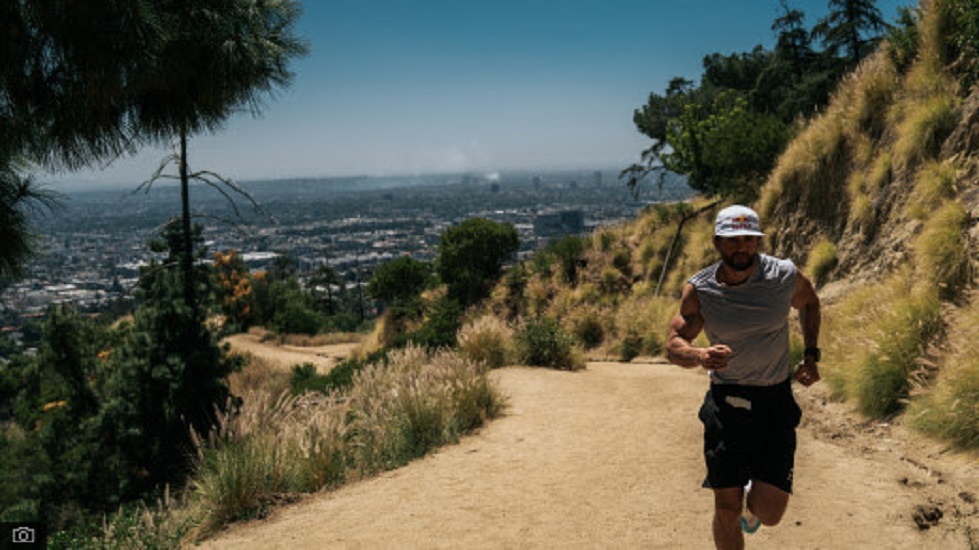
Red Bull athlete Arda Saatçi (Germany) has begun a 600 km (372 miles) ultrarun from Badwater Basin in Death Valley to Santa Monica Pier in Los Angeles, attempting to complete the route in 96 hours.
The 28-year-old ultramarathon runner and hybrid athlete is taking on the equivalent of more than 14 marathons in four days, with 6,000 metres of elevation gain, desert heat, urban traffic, and severe sleep deprivation expected across the route.
Saatçi started at 11:00 PST (19:00 UTC) on 5 May and is scheduled to arrive at Santa Monica Pier at around 11:00 PST (19:00 UTC) on 9 May. He will be accompanied by his support team, medical care, and live cameras capturing every step of the attempt through a continuous livestream, including live tracking, vital stats, location, distance, speed, sleep data, and live guests from the world of sport and culture.
Follow Arda Saatçi’s 600 km ultrarun live from 5-9 May on Red Bull TV and YouTube.
Context
The route begins at Badwater Basin, the lowest point in the United States at 85.5 metres below sea level, where an endless salt flat, monotonous roads, no shade, and miles of visibility with no clear points of reference make it one of the most inhospitable places on Earth. From there, it moves through desert roads, busy highways, Route 66 sections, urban corridors, and the final approach into Los Angeles and the Santa Monica Pier area.
Conditions may include air temperatures above 40°C, road surfaces reaching up to 80°C, humidity below 10%, limited shade, and water loss of up to 1.5 litres per hour. The dry heat creates a “blow-dryer effect”, making dehydration harder to detect. The asphalt can also become hot enough to damage running shoes, forcing Saatçi at times onto the white-painted line at the edge of the road, where the lighter surface absorbs less heat than the darker asphalt and remains cooler.
Beyond the heat, the attempt carries the effects of nearly four days of acute sleep deprivation, including potential hallucinations and disorientation. Breaks will only be taken if the 96-hour time window remains achievable, with every minute of sleep weighed against the goal of completing 600 km within that limit.
Natural conditions also add risk across long stretches of isolation, with little infrastructure or settlement access. Potential wildlife encounters include rattlesnakes, scorpions, spiders, coyotes, and, in higher sections, mountain lion territory.
The challenge also coincides with the build-up to Route 66’s 100th anniversary in 2026, adding cultural context to a course that links desert endurance with one of America’s most recognisable road networks.
Saatçi’s Death Valley to Santa Monica Pier ultrarun is part of his ongoing Cyborg Season series, a collection of long-distance projects that includes a 2025 run across Japan from north to south, covering the equivalent of 72 marathons in 43 days, and a 2024 run from Berlin to New York, covering 3,000 km in 74 days.
Key Facts
- Event: 600 km ultrarun from Death Valley to Santa Monica Pier, Red Bull Cyborg Season series
- Athlete: Arda Saatçi, Germany, 28 – Red Bull athlete
- Start Date: 05-05-2026, 11:00 PST, 19:00 UTC
- Estimated Finish: 09-05-2026, 11:00 PST, 19:00 UTC
- Start Location: Badwater Basin, Death Valley, California, USA
- Finish Location: Santa Monica Pier, Los Angeles, California, USA
- Distance: 600 km (372 miles)
- Elevation Gain: 6,000 m
- Duration Target: 96 hours
- Equivalent Distance: More than 14 marathons
- Route: Desert roads, highways, Route 66 sections, and Los Angeles urban roads
- Daily Energy Target: Around 15,000 calories per day
- Total Energy Expenditure: Around 60,000 calories
- Fluid Loss Risk: Up to 1.5 litres per hour
- Heat: Air temperatures may exceed 40°C
- Asphalt: Road surface temperatures may reach up to 80°C
- Humidity: Often below 10%
- Sleep Strategy: A few short naps only
- Physical Challenges: Extreme heat, low humidity, dehydration risk, asphalt temperatures, sleep deprivation, hallucinations, disorientation
- Wildlife Risks: Rattlesnakes, scorpions, spiders, coyotes, and mountain lions in higher sections
- Support: Support crew, medical care, running coach, and live production team
- Livestream Data: Location, distance, speed, vital signs, sleep, and live guests’ commentary
Route and Performance Overview
- Death Valley Start – Badwater Basin: Saatçi begins at the lowest point in the United States, entering exposed desert roads with no shade, low humidity, high heat stress, and limited points of reference.
- Desert and Route 66 Sections: The course follows long road sections through desert terrain and along parts of Route 66, with heat, low humidity, isolation, and repetitive road impact shaping the early and middle stages.
- Highway and Urban Transition: The route moves towards Los Angeles, where heavy traffic, road safety, navigation, hydration timing, and fatigue management become central factors as Saatçi approaches more populated areas.
- Final Push – Santa Monica Pier: The attempt is scheduled to finish at Santa Monica Pier on 9 May at around 11:00 PST (20:00 CET), completing 600 km and 6,000 m of elevation gain in 96 hours.
Physical and Mental Challenges
The attempt is structured around managing heat, dehydration, sleep loss, and time pressure at once. Saatçi is expected to burn up to 60,000 calories across the 96-hour window, while balancing movement, refuelling, hydration, medical checks, and short rest periods.
Sleep is one of the central constraints. Every stop must be assessed against the pace needed to reach Santa Monica Pier within the target window, with acute sleep deprivation increasing the risk of altered perception, confusion, and impaired decision-making after multiple days on the road.
Preparation and Training
To prepare for the feat, Saatçi completed multiple long runs of 80–100 km and a seven-day block covering 242 km, including a 32-hour period without sleep. He also simulated the expected heat by running on a treadmill while wearing heat jackets, preparing his body for the high-temperature conditions expected in Death Valley and across the route.
His preparation has combined endurance volume with strength training, allowing him to maintain muscle mass and a physique less typical of most long-distance runners. Ahead of the start, Saatçi trained at the Red Bull Athlete Performance Center and acclimatised to the Californian environment and time zone.
All sleep, hydration, and refuelling stops have been planned with his running coach to limit time loss while supporting the physical demands of the route.
Athlete Quotes
Arda Saatçi, ultramarathon runner and endurance athlete: “This is precisely the kind of challenge that will push me to new limits – and push me to try to break through them. The conditions are brutal, and I will try to grow beyond my limits there and master this challenge as best as I possibly can, hopefully crossing the finish line with a winner’s smile.
My goal is to become the face of sport, so that no matter where people are in the world, when they hear the word ‘sport,’ my name also comes to mind. I want to inspire as many people as possible, to be a role model, and to leave a lasting footprint.”
Expert Quotes
Lukasz Wolejko-Wolejszo, Arda Saatçi’s running coach: “The Death Valley one isn’t a classic run, but a system under constant stress. Heat, sleep deprivation, and energy intake are constantly working against each other. If one factor fails, everything fails. The key is whether Arda can remain functional for 96 hours -thermally, metabolically, and mentally. We haven’t planned a perfect run; instead, we’ve worked on preventing a collapse. You don’t lose to the course; you lose to physics.
Conditions like heat exposure, limited cooling, energy intake under stress, and cumulative fatigue over several days can’t be fully simulated. You can only prepare the relevant systems and increase their stability. Therefore, you can’t recreate Death Valley, but you can learn not to fall apart in it.”
Gzim Ferizi, Arda Saatçi’s physiotherapist: “We integrated night runs and specifically trained phases with up to 24 hours without sleep. Typical sessions reflect exactly these demands: marathon, 30-minute nap, then straight into a half-marathon – these transitions are what matter later. The goal was to prepare the body to keep functioning steadily even under extreme fatigue.
We also deliberately prepared for the terrain: through many trail sessions, we got the body used to changing surfaces and technical sections. This is a crucial factor on this route. We also specifically combined individual stress factors. We simulated elevation gain in a controlled way on the treadmill; for example, with 8-hour walking sessions at a 5% incline. This way, we deliberately got Arda used to walking and monotony. Heat stimuli were also added: bike sessions in the sauna helped us get the body used to sustained exertion in the heat.
We specifically trained to deliver performance immediately after short naps. In the end, it’s not maximum performance that decides, but the ability to keep regenerating and moving forward.”
Why It Matters
A 600 km virtually continuous road ultrarun from Death Valley to Los Angeles places Saatçi at the intersection of endurance sport, creator-led live performance, and data-driven athlete storytelling. The attempt is built not only around distance, but around visibility: viewers can follow the physical and mental effects of heat, sleep deprivation, calorie intake, hydration, speed, and fatigue in real time.
About the Athlete
Arda Saatçi is a Red Bull athlete, ultramarathon runner, hybrid athlete, entrepreneur, and founder of DAY ONE® and co-founder of PERFORM ALL. Named to Forbes 30 Under 30, the 28-year-old from Berlin has built a following of 2.5 million people across social media, where he promotes his “You vs. You” mantra as a framework for overcoming personal obstacles.