




















The most efficient Audi model in the company’s history: energy consumption of just 12.8 kWh/100 km and a range of up to 646 kilometers according to WLTP
Excellent aerodynamics: a drag coefficient of 0.24 – the best value in Audi’s compact segment
Broad offering: four power levels and three battery sizes
Bidirectional charging available as an option: Vehicle-to-Load1 and Vehicle-to-Home2
Full-size-class standard equipment: emergency brake assist, evasive assist, and attention assist, adaptive cruise control (ACC), plus parking system plus and rearview camera
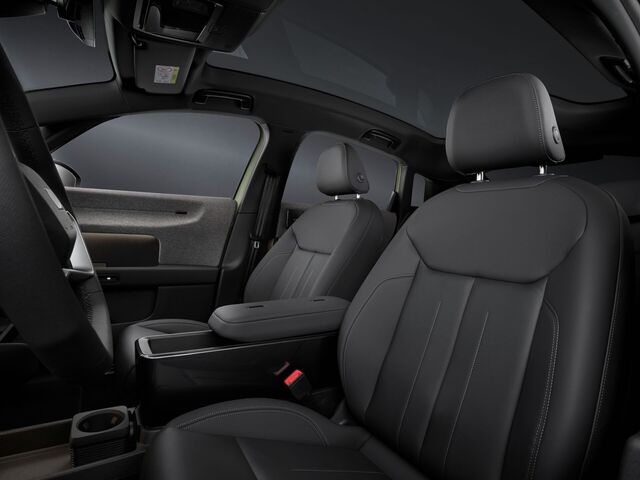
Spacious on a compact footprint: high interior versatility and a 1.6-square-meter panoramic glass roof
Standard infotainment: Audi assistant with artificial intelligence, e-tron route planner, and other digital features
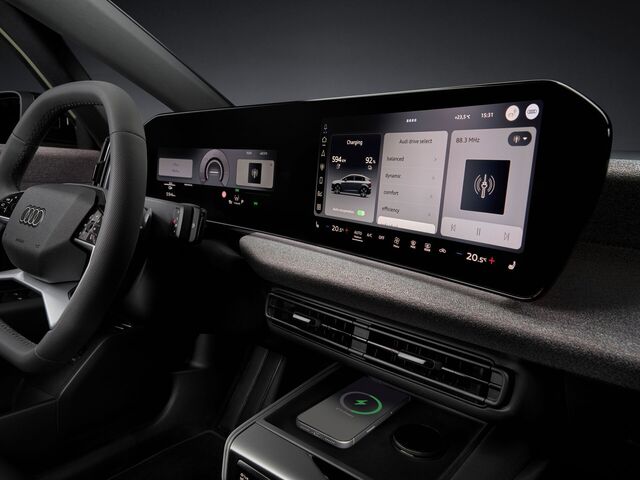
Display and operating system: standard MMI panoramic display with 11.9-inch Audi virtual cockpit plus and 12.8-inch MMI touch display with a curved design
Premium-segment premiere: the Fidlock fastening system included as standard
Efficient production at Audi’s home plant in Ingolstadt: intelligent use of existing robots and production equipment
Orders open September 10, 2026; market launch in December 2026; prices in Germany starting at 38,200 euros
Efficiency in focus
The A2 e-tron was developed for customers who do not want to make compromises in everyday life. They expect an electric car that combines low operating costs, long range, and generous space with modern technology.
That is exactly what this vehicle is designed for. The A2 e-tron achieves its particularly low energy consumption through the interaction of numerous measures.
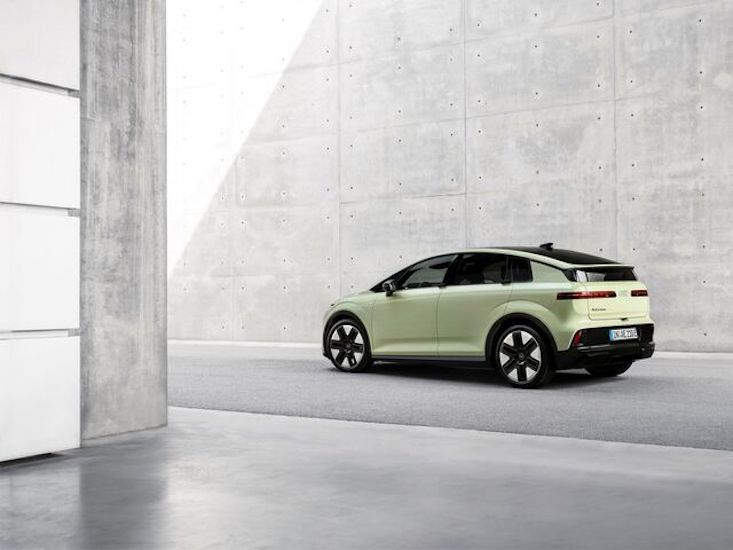
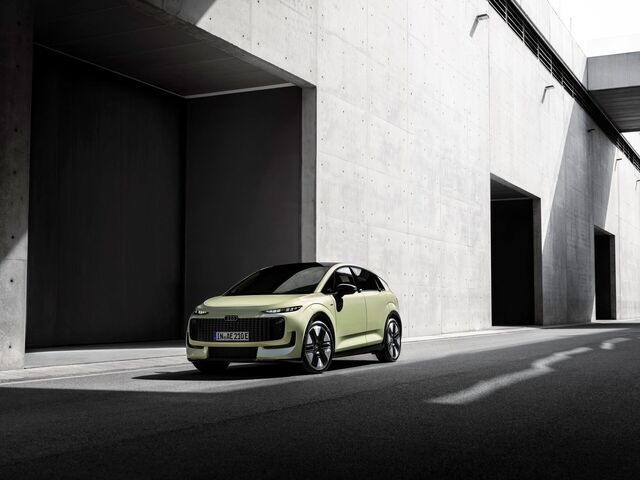
Improved aerodynamics reduce air resistance to a minimum. With a drag coefficient of 0.24, the A2 e-tron delivers the best value in Audi’s compact segment.
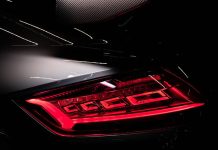
Clear, aerodynamically optimized surfaces and carefully integrated details define the exterior. These include a controllable cooling-air intake and a largely enclosed underbody.
The newly developed aero wheels and so-called gap reducers make a further contribution. Integrated into the wheel-arch trim, they reduce the gap between the wheel and wheel housing.
Wing-shaped electric door handles with haptic sensors blend into the side line and provide a particularly convenient operating experience.
Energy intelligently used
Tailored to customers’ requirements, the A2 e-tron offers a choice of four power levels. They range from 125 kW and 350 Nm3 in the entry-level variant to 240 kW and 545 Nm4 in the top model.
Depending on the power level, one of three battery sizes 52, 61, or 84 kWh (gross battery capacity) – is used.
Four recuperation levels, including one-pedal driving via selector lever B, round off the efficient powertrain concept.
As a complete package, the vehicle with permanently excited synchronous motors and rear-wheel drive can achieve a range of up to 646 kilometers according to WLTP.
The A2 e-tron 140 kW5 with the optional efficiency package has a WLTP-measured consumption of 12.8 kWh per 100 kilometers. This makes it the most efficient Audi ever.
The A2 e-tron also supports bidirectional charging – the high-voltage battery can not only draw energy from the grid but also selectively supply it to external consumers.
For example, the Vehicle-to-Load (V2L)1 function can be used to power e-bikes from a power socket in the trunk or via an adapter at the charging port.
In Germany, Austria, and Switzerland, the A2 e-tron can also function as a home battery with suitable DC wall boxes via Vehicle-to-Home (V2H) 2, feeding stored energy back into the household grid.
This makes one thing clear: Audi’s new generation of premium electric mobility is defined by technical intelligence and the consistent improvement of the vehicle’s overall efficiency, rather than by larger batteries or more power alone.
Spacious on a compact footprint
The focus on efficiency continues in the interior. Customers do not simply want electric cars. They want mobility that fits their everyday lives.
Despite its compact exterior dimensions, the A2 e-tron offers a spacious and inviting interior. The central design element is the Softwrap – a soft, fabric-covered surface that extends from the instrument panel across the doors and into the rear, creating a welcoming atmosphere.
An optional panoramic glass roof with 1.6 square meters of glass floods the interior with light; a special coating also protects occupants from UV radiation.
The Fidlock fastening system provides smart organization and modular storage solutions: Audi is the first premium carmaker to integrate the patented magnetic mechanism as standard equipment – one click, and everything is securely in place – from the cup holder to the charging cable bag.
Audi connected work includes Microsoft Outlook, Microsoft Teams, and an AI-based Work Agent that keeps customers connected to their workday even while on the road.
Premium also means using resources intelligently without compromising on quality or customer experience. Audi is taking a new approach to materials in the A2 e-tron as well.
Depending on the configuration, the Audi A2 e-tron features more than 300 components made from recycled materials, including steel, aluminum, and plastics.
More than 100 components use post-consumer recycled materials. At the same time, Audi is designing components so that they can be recycled and reused more easily at the end of their life cycle.
The A2 e-tron paints a picture of how the circular economy is to become an integral part of modern premium mobility in the future.
Efficiency in production
The A2 e-tron is not only an efficient vehicle; it also represents more efficient development and production processes. Audi brought its entry-level electric model to the road 21 months earlier than comparable predecessor models.
This was made possible by streamlined development processes and greater vehicle maturity earlier in pre-series production. The A2 e-tron thus exemplifies how Audi is also advancing its transformation within its own production operations.
The A2 e-tron is built at Audi’s home plant in Ingolstadt. There, Audi uses more than 1,200 existing production components and around 250 robots that were already in use for other models. This reduces investment and saves resources.
In the “pearl chain” production principle, Audi is also introducing a new form of factory control in Ingolstadt that has already been used successfully at the Neckarsulm plant.
The fixed sequence of customer orders enables more efficient processes, reduces complexity, and cuts the effort required for storage and sequencing.
Pricing and market launch
Audi has tailored its new fully electric entry-level model specifically to the needs of European customers. High efficiency, generous space, and digital services.
Developed in Germany and built in Ingolstadt. The A2 e-tron can be ordered starting September 10, 2026, and the first vehicles will be at Audi partners from December 2026.
Starting price in Germany for the most efficient Audi ever: 38,200 euros.