




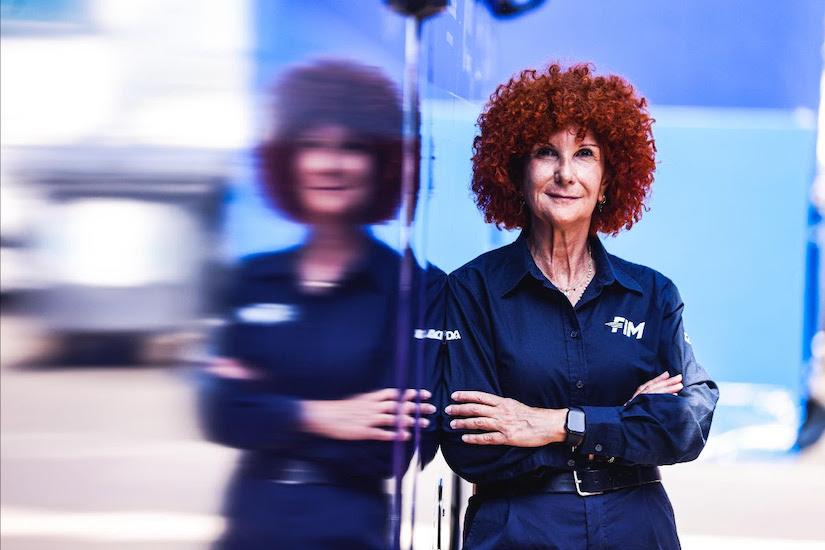
| “Mine is a wide-ranging role” |
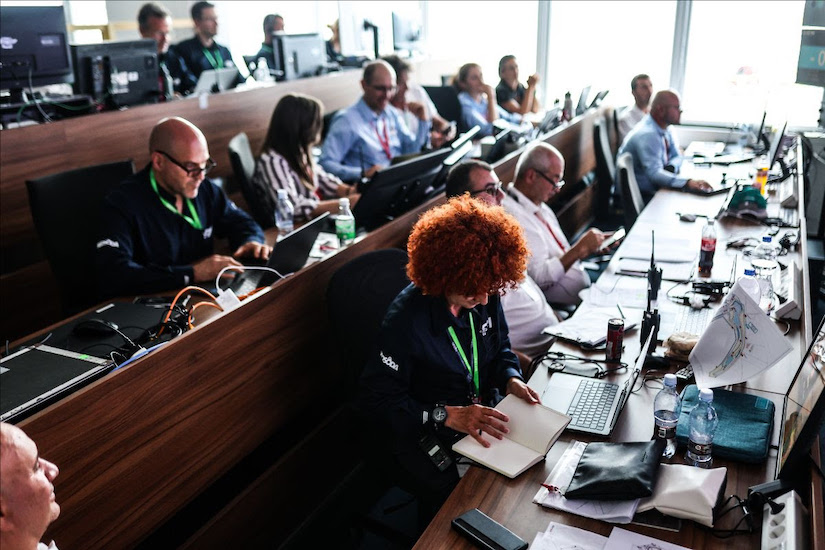
| There are different aspects to my role as WorldSBK Medical Director. The first has to do with the inspection of medical services at each circuit and the medical homologation of new circuits. A second aspect concerns the medical assessment of riders who are injured or have medical problems and are returning to competition, and riders who sustain injury or have a medical problem during an event. We assess whether they can continue to be fit or not for the event. The third, no less important aspect of the work is to be in race control with the race director, safety officer, chief medical officer and all the other officials involved in the management of accidents on track, which must be done as a team to ensure the safe evacuation of an injured rider. Passion meets purpose Right after I finished high school, when I enrolled in medicine, I was already thinking that my specialization would be sports medicine. My mother is a big sports fan, so maybe that conditioned me a little, and when I was very young, I’d go with my father to a local motocross track to watch the races. At one point I became passionate about trials racing, which is where my work began. I started following the Italian trial championship, and then the Italian trial team in the world championship. My first professional experience of circuit racing was with Clinica Mobile in MotoGP. We’d be there from dawn to dusk but were very happy to work in that way. And for me it was very educational, because I really got to understand the circuit racing world. I had a lot of fun there because, besides working a LOT, the paddock became a family. I still have a great relationship with many people from the MotoGP paddock. The rewards… Well, I love life in the paddock itself. I’ve been in SBK since 2014, so it’s like family now, like working in a small town where you know everybody. Then every round has its own story of course. But what I really like is when we have new circuits where we need to put everything together. This represents a real challenge. I start with the map, then I like to go deeper, if there are views with drones for example, to really understand the track development. Then I interact with all the local players to actually build the event. This is an aspect that I really like, the challenge of a new project. This year we’ve been following Balaton, for example. … and the more challenging aspects One of the challenges we’ve met is to improve the safety, year after year, by working together. Working in a team for me is a positive challenge, as it’s stimulating, you reach a goal more easily, and the final product is better too. Another challenge for me involves educating the riders about medical aspects and helping them to understand why they might be declared unfit. And I have to say we’ve achieved really good results because it’s rare that a rider questions a decision. If you talk to the riders, they understand, but this must be done in advance of any medical checks so that they’re prepared and know what the recovery process might look like. This is a challenge I’d say I’ve met over a period of several years. At the end of the day, our job is to help them get back on track at the right time, and safely. It’s not just about their own safety, but also the safety of others who race with them. And they understand this. In my role, it is important, always and above all here, to be empathetic, because if you are not empathetic, you are finished. Empathy is fundamental. Inclusion in motorsport With WorldWCR, it was all new, even for the women riders themselves, as many of them came here with no knowledge of the world championship context so it was a challenge for them too. They’ve grown a lot since the start of 2024, and I think we’ve made some great progress. This is also a very interesting challenge because we are an inclusive sport. We now have a women’s championship, but we also give the opportunity to anyone, irrespective of gender, to compete in the other classes. So, if a woman wants to compete in a mixed category, she can. Curious but cautious I don’t ride a motorcycle. Perhaps because I never had the opportunity to get into it. I am a bit of a perfectionist in everything I do, so not having learned to ride a motorcycle from an early age means I don’t consider it safe, and for me the safety aspect is fundamental. I’m a swimmer and am never afraid of the water in any situation, but I don’t feel equally safe on the road. So, I prefer to follow motorcycling from a safety and medical standpoint, as a doctor. I’m a very curious person though, so I jumped at the chance to go on the two-seater with Mamola at Assen many years ago. I was given the opportunity, but I also wanted to experience the sensation for myself. We did two flying laps, and I really enjoyed it! The ongoing safety journey… I can say that the situation is much improved with respect to the past, and the goal is to continue to improve safety, in terms of the protections and studies done before any event. We are always taking steps forward in terms of the technology, the research, the protections themselves, so I’m very positive about the safety. It’s all about working as a team. We’re not playing golf or tennis here, so we must always remember that there’s an interaction between the rider and the mechanical vehicle. So, we think about electronics, speed, the weight of the bike, and so on. Any criticality that might emerge is discussed in order to find a solution and further improve safety, but we’ve already reached excellent levels considering the sport. This is a high-risk sport and nobody denies it. But there is constant evolution and the ongoing introduction of hyper-technological solutions for protection. Riders as patients A rider – male or female – has the motivation, because their goal is to return to racing in most cases, so psychologically their recovery is facilitated by this. They’re able to recover quicker than if they didn’t have this approach to sport. There is a physiological time frame of course, but it helps when the person is strong and motivated. The important thing is that recovery is approached in the right way, with the support of professionals who help with the entire rehabilitation process, assessing the injury and the ongoing functionality of the body part in question. Driven by a love for the job Passion is the number one thing that motivates me, without a doubt. This is a very tough job because you are often travelling, it’s intense, there’s a lot of responsibility, for the riders, for those working on track. So, passion is fundamental along with commitment and knowledge of the discipline of course. I continue to do it because I like it, there’s no other explanation! As for balancing work with my personal life, my partner works in MotoGP, so he completely understands the situation. And a doctor’s work, wherever that may be, will always involve long hours. When I’m home and working in the clinic, I’m there all day and get home late in the evening, so it’s not so different in that respect. Ever evolving… I am proud of what I am. Everything I have achieved makes me very proud. I am also happy with the relationships I have with the people around me. For me, tomorrow is always a new challenge. And it’s this that motivates me to continue along this path. The important thing is that my passion remains alive and that I’m always working towards new goals, so the work never becomes ‘flat’ – I’m not interested in flat! |
- Advertisement -