








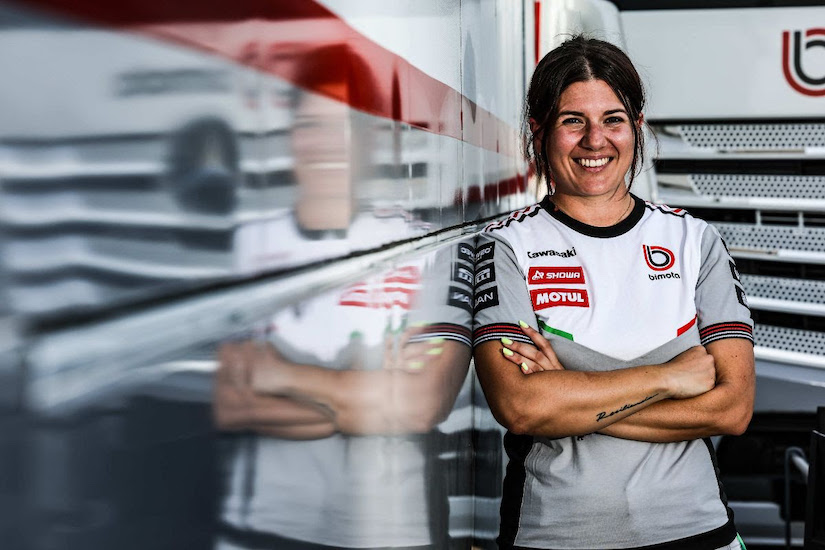
Where it all began…
As a teenager, I would watch MotoGP and Formula One races on TV. I also went to see some racing at different circuits and was interested in how it all worked. I saw how technical it all was, and that fascinated me. I didn’t have any contacts in the paddock, and no one did that sort of job in my family.
I think I was just inspired by what I saw the mechanics and engineers doing at the tracks, and so I decided to study mechanical engineering at university in Malaga. I completed two years of the course, but it was very theoretical, whereas I wanted something more hands-on.
So, I went on to a specialist course in mechanics for racing and, as part of this training, I was able to gain practical experience working in the Spanish MX championship. That’s how it all began. I finished that course and moved to Barcelona a couple of months later to start working with a motocross team. I’d work in the workshop during the week and attend races at the weekends.
The opportunity that opened the door
Axel Bassani’s crew chief, Uri Pallarès, visited the shop where I was working, we got chatting, and before I knew it, I was here. I arrived in WorldSBK in 2019, and initially worked in the SSP300 class, with Ana Carrasco.
Working with a female rider was a great experience. It’s great to see more women competing, but whether the rider is male or female, my job remains the same. It was a fantastic year, in which I learned a lot.
What impressed me most about Ana was her discipline; she’s incredibly demanding of herself when it comes to training, diet, preparation… We had a lot of fun, worked incredibly hard and achieved some great results; it was a really rewarding experience.
Finding my niche
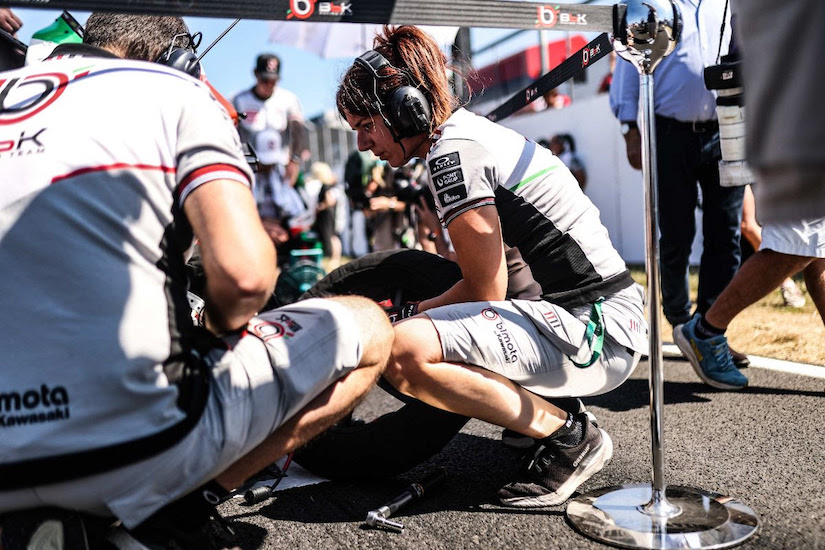
In SSP300 I worked as a mechanic. But when I came to WorldSBK, I discovered the role of tyre mechanic and fell in love with it! The team gave me the job.
There’s a lot more to it than people might think, as I need to monitor the telemetry, the tyre pressures, there’s so much information. I didn’t know that at first, so it was a real eye-opener.
My favourite part is probably that I’m the one making the decisions. I’m the one who sets the tyre pressures and manages everything. It’s like I’m having a conversation with the tyre. And I enjoy that because it makes me think everything through carefully.
I’ve learned so much and now know what works and what doesn’t. I know that if the temperature changes, I can adjust this or that accordingly. I enjoy having that responsibility.
I think maybe 70% of my work is preparation, and 30% problem solving in the moment, which might occur when there’s a red flag, for example. I like to try and have everything under control as far as possible, otherwise I cannot sleep! Perhaps the most challenging moments are when we must fit tyres that are decided at the very last minute.
It’s not just a case of mounting them on the bike, as I have to go to Pirelli, have the tyres fitted, bring them back, get them warmed up and prepare them.
Staying calm in the chaos
I think the first and most important skill is organisation. You need to have everything under control because even something small can become an issue in our work. It’s different in WorldSBK compared to motocross, everything’s on a larger scale and so it can be more stressful.
One time, Alex crashed in Superpole and pitted, and we had to get everything done and send him back out with 6 minutes to go. You must always be ready to react and not panic.
I’m better at managing the pressure now, but looking back, I realise this didn’t come easily in the early days. I used to take the stress home with me and dwell on things, wondering if I should have done this or changed that… Luckily, I had teammates who were always so supportive.
I was very careful to work methodically, telling myself to work through the tasks and check this, then that. Now I have it all in my head of course, but in the first year I had a little book and would make notes to keep on top of all the things I needed to do.
A defining moment in WorldSBK
In 2020, I moved to WorldSBK and started working for the Kawasaki Racing Team, as Jonathan Rea’s tyre mechanic. I’d say my biggest achievement until now was working my first race alone, because that’s when I realised I was capable of doing a good job.
That season, my first in World Superbike, I worked alongside a main tyre technician, in an assistant-type role. But when it came to the Estoril round, the very weekend that Johnny won the championship, the main tyre mechanic didn’t come and so I worked alone.
I was nervous and so spoke to him beforehand and made a lot of notes in my little book! It was a very special moment for me, my first race working as the sole tyre technician, and a title to celebrate at the end of the weekend!
The people behind the passion
When I’m here working, I’m happy. I love my work and love being with my colleagues; we laugh a lot. We’re like a family. Yes, it’s hard to be away from home and the travelling can be tough, but when I get to the track, I am reminded each time of how much I love it.
To do this job, any paddock role really, you need to have a friendly disposition because you spend a lot of time with the same people and the relationships need to be collaborative. And I’m lucky that my boyfriend at home understands this work and supports me. I miss him when I’m away of course, but he always tells me to go and have fun, and that he’ll be waiting when I get back.
A sport that never stands still
In the end, things evolve every year in this world. Even if it’s just a small component, things are constantly changing and improving. In the end, whether you’re an engineer or a mechanic, we all must keep adapting and evolving as the sport moves forward.
How do I think the situation will develop in the future? I honestly don’t know, but I do know it will keep progressing because everything moves so quickly.
There’s always some new development, a wing, a tyre… Next year the championship will welcome a new tyre supplier, and I’m interested to see what differences that brings in terms of our work method and performance.
Lessons learned along the way
My advice to my younger self would be to stay calm. That’s really the key to doing something well – don’t lose your nerve, stay composed, and have everything clearly organised in your mind. Once you know exactly what needs to be done and what doesn’t, everything starts to flow. It all works out.
And if you do make a mistake, always keep in mind that you learn from everything that happens, good and bad. That’s what experience is for. Over the years you keep learning, and something that used to happen to you twice a season will eventually not happen anymore.
As for the future, I want to stay exactly where I am and evolve with the team, perhaps developing some new work methods or strategies. The goal is always to try and improve. I’m 33 now, but I think if 15-year-old Mara could talk to me, she’d tell me to stay exactly where I am, in my dream job!