


















Special firing order of 1-2-4-5-3 produces a signature sound
A wide power range and an even larger fan base: innovative production engines and high-performance racing engines
Audi Tradition exhibition from August 1, 2026, to February 28, 2027
Audi’s five-cylinder engines have left a deep mark on the recent history of the brand with the four rings, their firing order producing the characteristic sporty, robust sound.
With a record of motorsports success and outstanding performance in production vehicles, the five-cylinder engines embody “Vorsprung durch Technik.”
Audi Tradition is celebrating the anniversary of this iconic engine with a new special exhibition: “1-2-4-5-3: 50 years of Audi five-cylinder engines.” The exhibition opens August 1 at the Audi museum mobile at the Audi Forum in Ingolstadt and runs through February 28, 2027.
“50 years of the five-cylinder engine is a very special anniversary for Audi: few technologies evoke such strong emotions or have shaped the brand’s image so profoundly over the past five decades. That’s why so many Audi fans and museum visitors have asked us whether we’d mark this anniversary with a special exhibition — a wish we were only too happy to fulfill,” says curator Stefan Felber.
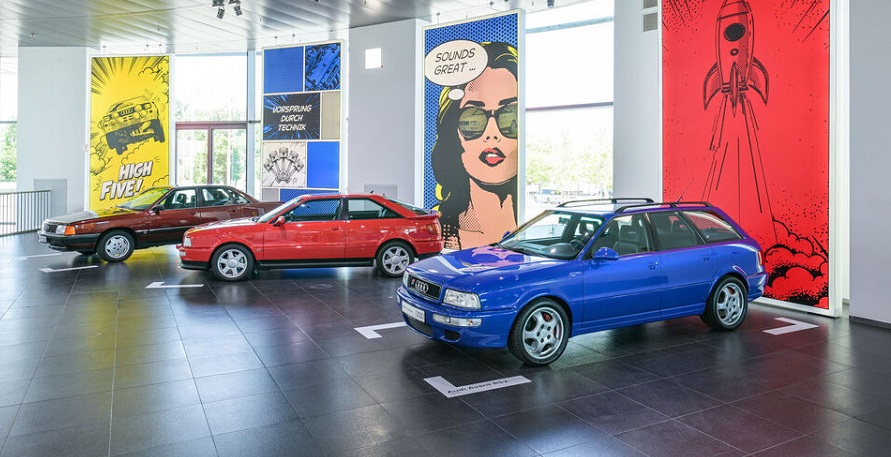
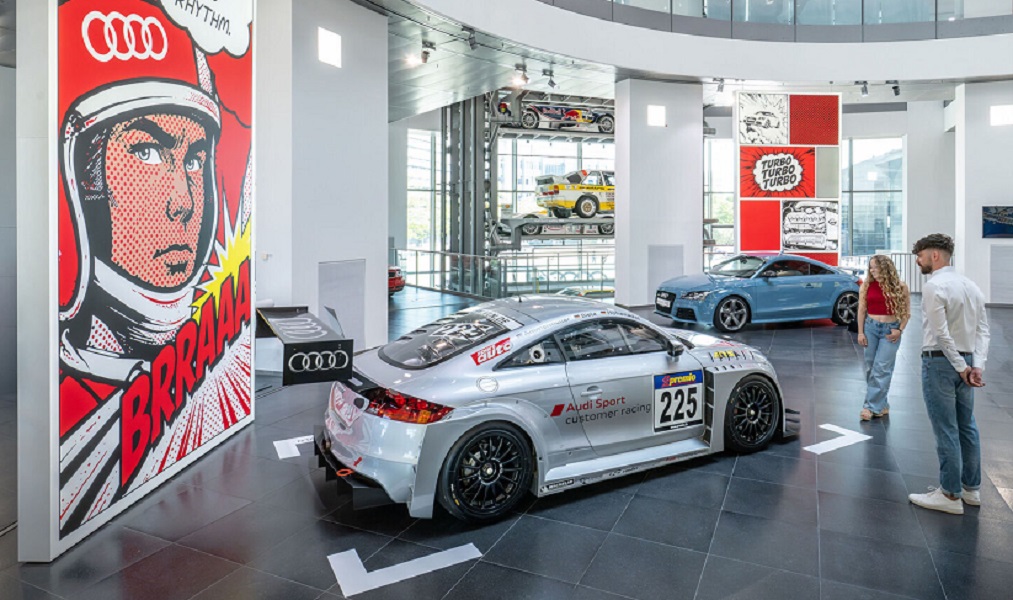
For the special exhibition, he has assembled seven engine displays and fourteen vehicle exhibits tracing the fifty-year history of five-cylinder development.
Vehicles on display in the new special exhibition:
Megola motorcycle
Audi 100 5E (C2)
Audi 100 5D (C2)
Audi 200 5T (C2)
Audi 90 quattro
Audi 100 TDI (C3)
Audi S2 Coupé
Avant RS2
Audi S6
Audi TT RS
Audi TT Motorsport
Audi RS Q3 concept
Audi RS 3
Audi GT50 concept
The story of the Audi five-cylinder engine began in August 1976 with the unveiling of the second-generation Audi 100. Set to move upmarket from its predecessor, the new model prompted Audi engineers to debate the use of inline five-cylinder and six-cylinder engines during its development.
The latter were ruled out due to space constraints and the unfavorable weight distribution. So the decision-makers opted for the inline five-cylinder engine — a drive concept that was known but had seen little use in high-volume automotive production up to that point.
Drawing on the inline four-cylinder engine (EA 827) that had first appeared in the Audi 80 in 1972 and was by then in use across the Volkswagen Group, the engineers developed the five-cylinder gasoline engine designated EA 828.
It gave the second-generation Audi 100 a meaningful step-up in both power and prestige and — in various configurations — would go on to shape engine technology at Audi in a very special way for decades to come.
Many design features were carried over from the four-cylinder engine, such as the overhead belt-driven camshaft, the 88-millimeter cylinder spacing, the cylinder diameter, and the layout of the valves, spark plugs, and fuel injectors.
The longer crankshaft, however, required a larger main bearing diameter; among numerous other changes from the base engine, the stroke was also increased to 86.4 millimeters. The five-cylinder’s distinctive sound comes from the odd number of cylinders and the unique firing order: 1-2-4-5-3.
Cylinders that are directly adjacent and cylinders far apart from one another alternate at a firing interval of 144 degrees of crankshaft rotation, a setting chosen to ensure the smoothest possible operation.
A modern fuel injection system enhanced the top-of-the-line model’s performance, efficiency, and power delivery. The first Audi five-cylinder engine, displacing 2,144 cc in the Audi 100 5E, produced 100 kW (136 PS). It accelerated the car to 100 km/h in 9.5 seconds and delivered a top speed of 190 km/h.
As early as 1978, Audi introduced the first five-cylinder diesel: a naturally aspirated diesel engine with a displacement of two liters and producing 51 kW (70 PS). A year later, the first turbocharged five-cylinder gasoline engine made its debut in the flagship model of the day, the Audi 200 5T (125 kW/170 PS).
Since the displacement could not be significantly increased, turbocharging was the only way to meaningfully boost the engine’s power. The year 1980 proved pivotal for the five-cylinder’s public profile: in March, the brand with the four rings unveiled the Audi quattro at the Geneva Motor Show.
Its turbocharged five-cylinder engine produced 147 kW (200 PS) at launch. This powerful technical package — combined with intercooling and quattro permanent all-wheel drive — took Audi to a string of motorsport successes in the years that followed, including two manufacturers’ world championships and two drivers’ world championships in what was still a hugely popular rallying scene.
Those titles strengthened the brand’s image and fueled the legend of the five-cylinder. In the rally cars of what later became Group B, the final version of this formidable engine — now featuring four-valve technology — delivered well over 500 PS. In the Audi IMSA GTO, which shook up American touring car racing in 1989, output reached 530 kW (720 PS).
Audi also gave this beloved engine some notable performance upgrades in production models: in the Avant RS2, introduced in 1994 toward the end of the Audi 80 (B4) production run, the engine extracted 232 kW (315 PS) from its still-modest 2.2 liters of displacement.
At the time, the Avant RS2 was the most powerful production station wagon in the world, and it established the tradition of Audi’s RS high-performance models. Almost at the same time, the five-cylinder engine made its exit from the B segment with the introduction of the Audi A4 (B5) in 1994, gradually giving way to new V6 engines through the mid-1990s.
The last five-cylinder engines in the original series — the 2.5 TDI in the Audi A6 and the 20V turbo with a displacement of 2.2 liters in the Audi S6, itself on display in the new exhibition — were phased out in 1997.
Fans of the five-cylinder sound had to wait until 2009, when quattro GmbH launched the Audi TT RS with a transversely mounted 2.5-liter TFSI engine. Developed on the basis of the Group’s EA 855 engine, this high-performance unit featured a reinforced engine block and delivered 250 kW (340 PS) of power.
In the years that followed, the popular engine reappeared in various configurations in the RS models of the A series, overseen since 2016 by Audi Sport GmbH — reviving the five-cylinder’s cult status and being named “engine of the year” nine times in a row.
More information about the special exhibition in the Audi Tradition app
The Audi Tradition app gives visitors to the Audi museum mobile access to in-depth content about the featured vehicles — through text, audio guides for selected models, and even 360-degree panoramic views.
The app provides information on the exhibits of both the special and permanent exhibitions. It also connects users to the Audi Tradition website, the Audi Tradition online shop for accessories, literature, and spare parts for Audi’s modern classics, and Audi Tradition’s Instagram and TikTok channels. The free app can be downloaded from the main app stores for iOS and Android smartphones.